How Temperature and Pressure Affect Stainless Steel Hoses
Many industrial sectors rely on hoses for a wide variety of applications, namely to transfer, suction, or discharge liquids, gases, slurries, and solid materials. Their reliability is critical to the safety and efficiency of the systems they operate in. From chemical processing and power generation to food production and manufacturing, hoses often form the backbone of fluid transport systems.
However, not all hoses are capable of operating effectively under demanding conditions. In many environments, hoses must withstand extreme temperatures and high internal pressure simultaneously. Their ability to tolerate these stresses determines how safely and efficiently they perform over time.
Understanding how temperature and pressure influence hose performance is therefore essential when selecting the right hose for industrial applications, especially when working with stainless steel hoses designed for more demanding environments.
Why high temperatures and pressure matter for hoses
Many industrial systems not only operate under high pressure, but they also involve elevated temperatures. This combination creates uniquely challenging conditions that quickly rule out many conventional hose materials.
Heat affects most materials by weakening their structural properties. Rubber hoses, for instance, may soften and lose resistance to pressure when exposed to high temperatures. Plastics can warp, soften, or even melt. Even certain metals lose strength as temperatures rise, making them unsuitable for demanding thermal environments.
At the same time, pressure exerts outward forces that attempt to expand the hose walls. If the material cannot contain this force, the hose may swell, rupture, or burst entirely. The hose material must therefore possess sufficient strength and stability to resist these forces.
Stainless steel performs particularly well in such environments because it retains much of its mechanical strength across a broad temperature range. For example, Grade 316 stainless steel maintains strong structural properties even at temperatures exceeding 800°C. This allows stainless steel hoses to be used in applications such as steam transfer, hot oil circulation, and high-temperature chemical processing where other materials would quickly fail.
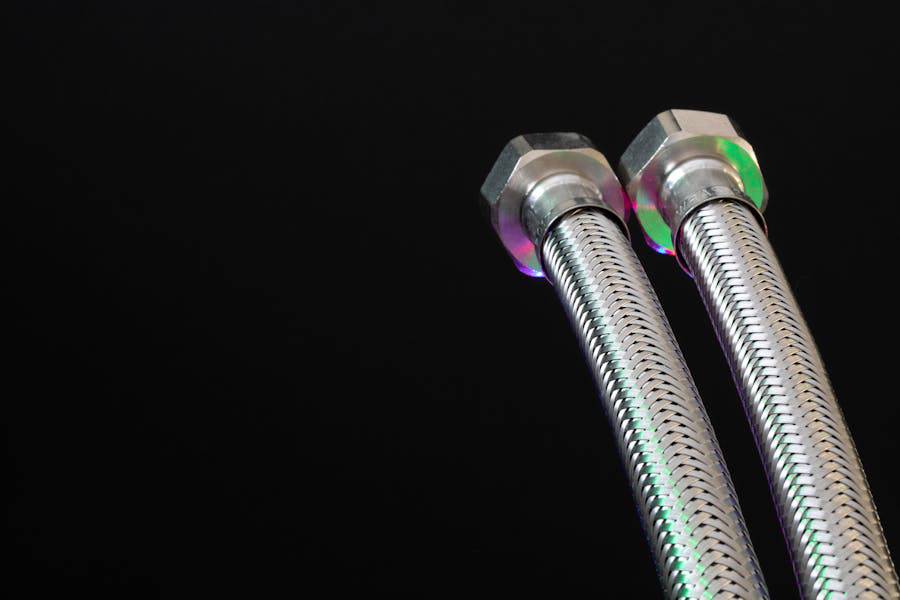
The design of stainless steel hoses also plays a major role in their performance. Most stainless steel hoses feature a corrugated inner core that provides flexibility while maintaining structural integrity. The corrugations resemble an accordion-like pattern, allowing the hose to bend and flex without compromising strength.
To further reinforce the hose, manufacturers typically add one or more layers of braided stainless steel wire around the core. These braided layers limit the amount the hose can expand under pressure, helping it withstand high internal loads. In many cases, additional braid layers increase the hose’s pressure rating, with some heavy-duty hoses capable of handling pressures exceeding 10,000 PSI.
Beyond construction, the metallurgical properties of stainless steel contribute significantly to its performance. Stainless steel has a much higher tensile strength than rubber, plastic, or many other commonly used materials, making it well-suited for applications where both temperature and pressure must be carefully controlled.
The link between temperature and hose performance
Temperature influences nearly every aspect of hose performance, including flexibility, pressure tolerance, chemical compatibility, and service life. Both the temperature of the media flowing through the hose and the surrounding environment must be considered during selection.
Operating outside the recommended temperature range can significantly shorten a hose’s lifespan or cause sudden failure.
1. Material wear, tear, and derating
Exposure to temperatures higher than a hose’s design limits can accelerate material degradation. Excessive heat may cause components to harden, soften, crack, or weaken over time. Rubber hoses may lose elasticity or become brittle, while plastics may deform or degrade under prolonged heat exposure.
By contrast, PTFE and stainless steel hoses are specifically designed to withstand higher operating temperatures, making them more suitable for harsh industrial conditions.
Low temperatures can also affect hose performance. When exposed to extremely cold environments, some materials become rigid and lose flexibility. Certain rubbers and plastics may crack or fracture if bent while frozen. In comparison, materials such as PTFE and silicone maintain flexibility even at sub-zero temperatures.
Operating outside the intended temperature range can result in several problems, including:
- Hardening or softening of the hose wall
- Delamination or blistering of internal liners
- Loss of flexibility and increased risk of kinking
- Leaks or contamination of transported media
- Burst failures under pressure
Another important consideration is temperature derating. As operating temperature increases, a hose’s maximum allowable pressure typically decreases. This occurs because heat gradually reduces the strength of the materials used in the hose’s construction.
For instance, a hose rated for 100 bar at 20°C may only safely handle around 50 bar at 100°C. To address this, manufacturers provide derating charts that allow engineers to determine safe working pressures at various temperatures.
2. Chemical compatibility
Temperature also influences how chemicals interact with hose materials. Certain chemicals become significantly more reactive or corrosive at elevated temperatures, increasing the risk of damage to the hose.
Stainless steel and PTFE hoses are widely valued for their excellent chemical resistance. Stainless steel resists many corrosive substances, while PTFE is known for its exceptional inertness. This combination allows these hoses to safely handle aggressive media across a wide temperature range.
Nevertheless, chemical compatibility should always be evaluated alongside operating temperature to ensure long-term reliability.
How pressure ratings influence stainless steel hose performance
Just like temperature ratings, pressure ratings play a crucial role in determining how effectively a stainless steel hose performs. These ratings help ensure that the hose can operate safely within the pressure limits of a particular system.
1. Material fatigue
Maintaining steady pressure is relatively straightforward for most well-designed hoses. However, fluctuating pressure introduces a different challenge: material fatigue.
Many industrial systems experience frequent pressure changes. Pumps may cycle on and off, valves may open or close rapidly, and flow rates can vary depending on operational demand. Each pressure fluctuation places additional stress on the hose structure.
Over time, these repeated stress cycles can create microscopic cracks within the material. Although these cracks are initially invisible, they gradually grow until the hose eventually fails.
Fatigue resistance, therefore, becomes an important performance characteristic. Stainless steel hoses are designed to tolerate repeated pressure cycles, allowing them to withstand demanding operational environments where pressure fluctuations are common.
2. Pressure handling
Pressure surges, often referred to as water hammer, represent one of the most destructive forces in fluid systems. Water hammer occurs when flowing liquid suddenly stops or changes direction, converting kinetic energy into a powerful pressure wave. These pressure spikes can briefly reach several times the normal operating pressure, placing enormous stress on hoses and fittings.
Although most hose ratings refer to steady-state pressure limits, stainless steel hoses provide improved resistance to these transient events. Their corrugated construction and reinforced braiding allow them to distribute shock forces more effectively than many non-metallic alternatives. As a result, stainless steel hoses often provide a greater margin of safety in systems where pressure spikes may occur.
The combined effect of temperature and pressure
While temperature and pressure are often discussed separately, they almost always occur together in real industrial systems. Their combined effect can significantly influence hose performance.
One key reason pressure ratings decrease as temperature increases is that heat weakens the structural strength of the hose material. As metal becomes hotter, its tensile strength gradually declines. This means the hose cannot safely contain the same level of internal pressure it could at lower temperatures.
Thermal expansion also plays a role. As temperature rises, the metal components within the hose expand slightly. This expansion can alter the structure of the corrugated core and place additional strain on the surrounding braid layers.
The braid reinforcement itself experiences compounded stress under these conditions. When internal pressure attempts to expand the hose while heat simultaneously reduces material strength, the braided reinforcement must carry a greater share of the load.
To account for these combined effects, hose manufacturers publish temperature-pressure derating charts. These charts provide guidelines for determining safe operating limits under different temperature conditions. By consulting these charts, engineers can ensure that hoses remain within safe working parameters even when both pressure and temperature are elevated.
Environmental factors that amplify temperature and pressure effects
Temperature and pressure rarely act in isolation. External environmental factors can intensify their effects and further influence hose performance. One such factor is exposure to corrosive chemicals. Even stainless steel, though highly corrosion-resistant, can degrade if exposed to certain aggressive chemicals over time. Chemical exposure combined with high temperatures may accelerate corrosion and weaken the hose structure.
External heat sources can also raise hose temperatures beyond the temperature of the transported media. Equipment such as furnaces, engines, and nearby steam lines can expose hoses to additional radiant heat, potentially pushing them beyond their rated limits.
Mechanical movement and vibration present another challenge. Industrial machinery often generates vibration that travels through connected piping systems. Continuous vibration can accelerate fatigue within the hose material, especially when combined with internal pressure fluctuations. Finally, thermal cycling or the repeated heating and cooling of a hose can gradually weaken materials over time. Each expansion and contraction cycle introduces stress into the hose structure, which may eventually lead to fatigue failure.
When selecting hoses for demanding applications, engineers must therefore consider both operating conditions and the broader environment in which the hose will function.
Conclusion
Temperature and pressure are two of the most important factors affecting hose performance in industrial systems. Each places significant stress on hose materials, and when combined, they can dramatically influence durability, safety, and operational efficiency.
Stainless steel hoses are widely used in demanding applications because of their strength, flexibility, and ability to withstand extreme operating conditions. However, even stainless steel hoses have limits. Proper hose selection requires careful consideration of temperature ranges, pressure ratings, fatigue resistance, and environmental conditions. In doing so, businesses can choose hoses that deliver reliable performance and long service life in even the most demanding applications.
If you’re searching for reliable and high-performance stainless steel hoses, explore the solutions offered by Pharmchem Engineering. Our range is designed to withstand demanding industrial conditions while delivering durability, flexibility, and safety across a wide range of applications. Get in touch with our team today to learn more about our stainless steel hose options and discover how our customised solutions can support your operations.