The Complete Guide To Rubber Hoses: Types & Applications
Walk into any workshop, factory floor, or garden shed, and you will likely find a hose coiled up somewhere nearby. It is one of those tools that gets taken for granted until it fails at the worst possible moment, leaving you with a puddle on the floor or a stalled production line. Understanding what makes a hose fit for its job can save you time, money, and a fair bit of frustration down the road.
This guide walks you through the main types of rubber hose, what they are made from, and where each one tends to shine. Whether you are sourcing hoses for a factory, a workshop, or a home project, knowing the basics will help you choose something that lasts rather than something that lets you down after a few weeks of use. Hoses may seem like a simple purchase, but the wrong choice can quietly cost a business far more than the price tag suggests. A hose that degrades too quickly under chemical exposure, or one that cannot handle the pressure a compressor puts out, ends up needing early replacement and can even cause safety issues on site.
What Makes a Rubber Hose Different
A rubber hose is built from layers of natural or synthetic rubber, often reinforced with fabric, wire, or fibre braiding to help it withstand pressure and resist wear. The rubber gives the hose its flexibility, while the reinforcement keeps it from bulging or bursting under stress. Manufacturers combine different rubber compounds and reinforcement methods depending on what the hose needs to handle, whether that is water, air, chemicals, or heat.
Compared to plastic tubing, a rubber hose generally offers better flexibility in cold weather and stronger resistance to abrasion. This makes it a common choice in industries where hoses get dragged across rough surfaces or bent repeatedly during use.
Common Types of Rubber Hose
There are several categories of rubber hose, each suited to a particular kind of work.
1. Water hoses – Water hoses are perhaps the most familiar type, used for gardening, car washing, and general cleaning. They are typically made from softer rubber compounds designed for easy handling and coiling.
2. Air hoses – Air hoses carry compressed air to power tools such as nail guns, spray guns, and impact wrenches. These hoses need to handle higher pressure than a standard garden hose, so they are usually built with tougher reinforcement.
3. Chemical transfer hoses – Chemical transfer hoses are designed to move fluids such as fuels, solvents, or industrial chemicals from one point to another. These require rubber compounds that resist corrosion and degradation, since the wrong material can break down quickly on contact with harsh substances.
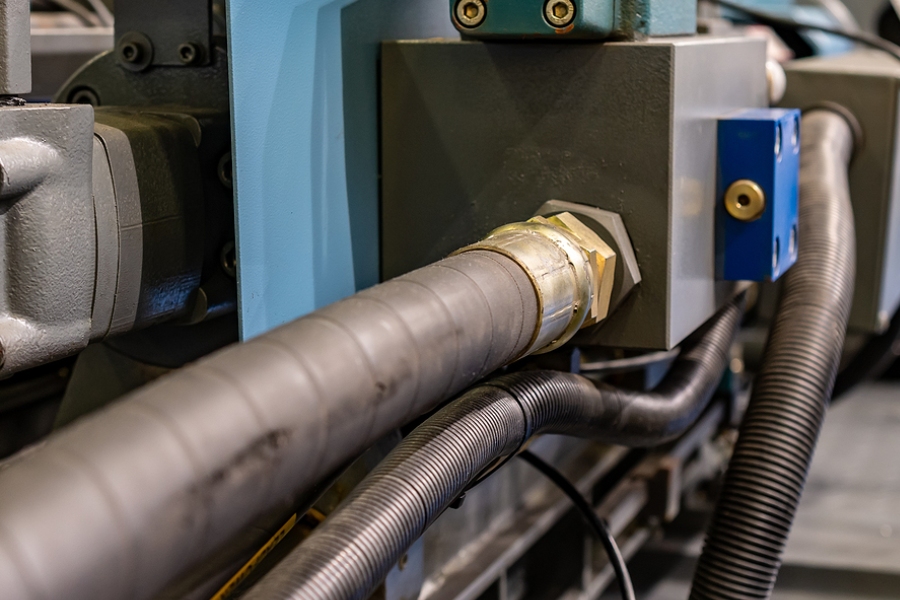
4. Hydraulic hoses – Hydraulic hoses carry pressurised fluid in machinery like excavators, forklifts, and manufacturing equipment. They are built with multiple layers of reinforcement, often including steel wire braiding, to handle the intense pressure these systems generate.
5. Steam hoses – Steam hoses are engineered to cope with high temperatures and pressure, commonly found in food processing plants, laundries, and industrial cleaning operations.
How to Choose the Right Hose for the Job
Picking the right hose comes down to a handful of practical questions. What will flow through it? At what pressure and temperature? Will it be dragged across rough ground, coiled tightly, or left stationary? Getting these answers clear before you buy will steer you away from hoses that look fine on paper but fail in practice.
Here is a quick reference to help narrow things down:
| Application | Typical Pressure Needs | Key Consideration |
| Garden and household use | Low | Flexibility and ease of handling |
| Compressed air tools | Medium to high | Abrasion resistance |
| Chemical transfer | Varies by chemical | Compatibility with the substance |
| Hydraulic systems | Very high | Reinforcement strength |
| Steam applications | High, with heat | Temperature tolerance |
For jobs involving aggressive chemicals or extreme temperatures, a Teflon hose may be better than a rubber hose in certain applications, though most everyday industrial and commercial needs are still well served by rubber. Check the hose’s fitting compatibility too, since a mismatched coupling can undo all the benefits of choosing the right hose material in the first place.
Maintenance Tips to Extend Hose Life
Even a well-chosen hose will not last forever without a little care. A few habits go a long way towards extending the working life of any hose:
- Store hoses out of direct sunlight when not in use, since UV exposure gradually breaks down rubber compounds.
- Avoid kinking or sharp bends, which weaken the internal structure over time.
- Flush chemical transfer hoses thoroughly after use to prevent residue buildup.
- Inspect regularly for cracks, bulges, or soft spots, especially near the fittings.
- Keep hoses away from excessive heat sources unless they are specifically rated for high temperatures.
Small checks like these can catch a failing hose before it causes a bigger problem, whether that is a burst pipe on a job site or a costly production stoppage.
Industries That Rely on Rubber Hoses
Rubber hoses show up in more places than most people realise. Construction sites use them for pneumatic tools and concrete pumping. Automotive workshops rely on them for fuel lines, coolant systems, and air conditioning units. Agricultural operations use them for irrigation and spraying equipment. Manufacturing plants depend on them for everything from compressed air lines to chemical processing systems.
Each of these settings places different demands on the hose, from resistance to oils and fuels in an automotive garage to resistance to fertilisers and pesticides on a farm. This is why manufacturers produce such a wide range of rubber compounds and reinforcement styles rather than relying on a single universal design.
Marine and offshore environments add another layer of demand, with hoses needing to cope with saltwater exposure, constant vibration, and temperature swings between deck and engine room. Food and beverage production has its own set of rules too, since hoses that come into contact with edible products need to meet hygiene standards that other industries simply do not require.
Getting the Fit Right
Beyond the type of hose itself, the diameter and length you choose will affect how well a system performs. A hose that is too narrow can restrict flow and strain a pump or compressor, while one that is too long can lead to pressure drops. Taking accurate measurements and understanding your equipment’s flow requirements before purchasing will help you avoid these issues altogether.
Conclusion
Fittings deserve equal attention. Threaded connections, quick-connect couplings, and crimped ends all serve different purposes, and using the wrong type can lead to leaks or premature failure even when the hose itself is perfectly suited to the job.
If you are sourcing hoses and fittings for an industrial setup, Pharmchem Engineering offers a wide range of equipment built to handle demanding environments, with options that can be customised to match your specific requirements. Reach out to discuss what your operation needs and find a solution that keeps things running smoothly from day one.