Sanitary Valves: What They Do And When To Use Them
Purity and hygiene are non-negotiable in sectors such as food and beverage production and pharmaceutical manufacturing. A single point of contamination can trigger product spoilage, costly recalls, and even serious health risks. While standard industrial valves perform adequately in many contexts, they simply cannot meet the rigorous hygiene demands found in these highly sensitive processing environments. This is where sanitary grade valves make the critical difference.
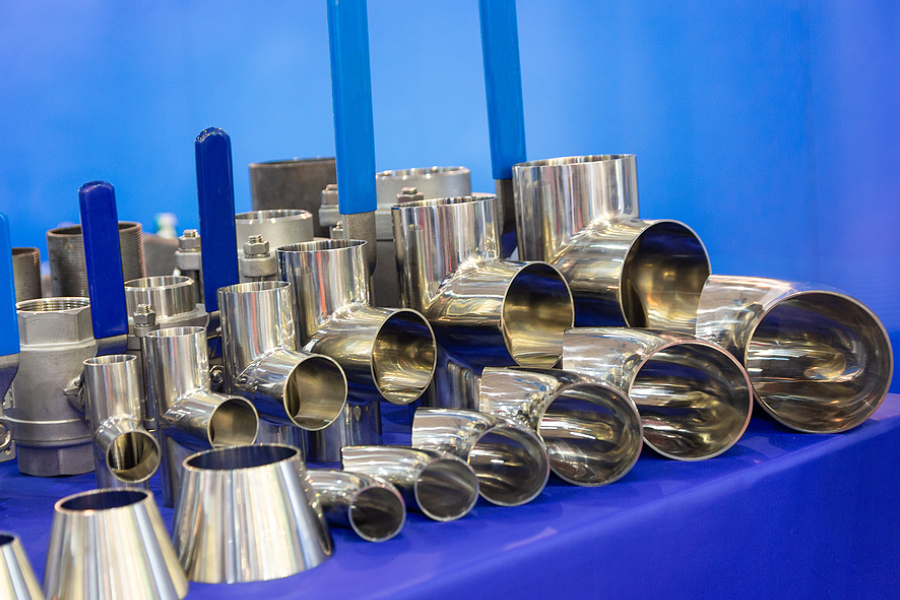
From the ground up, sanitary valves are engineered to prevent contamination, preserve product integrity, and support the strict cleaning regimes required in hygienic production lines. Where standard stainless steel pipe fittings in Singapore may suffice, hygienic processing lines call for precision-designed equipment to maintain the highest standards of cleanliness and compliance.
What is a sanitary valve?
Sanitary-grade valves (also described as hygienic or hygienic-design valves) are specialised components built expressly for piping applications that demand stringent hygiene, minimal microbial risk, and easy cleaning. These valves are commonly deployed in production pipelines where cross-contamination must be avoided, product spoilage prevented, and regulatory compliance maintained. In essence, a valve earns the sanitary designation when its design eliminates places where bacteria can hide, enables effective cleaning, and supports validation of cleaning or sterilisation procedures.
Key design features of sanitary valves
To appreciate why and when to use sanitary grade valves, it helps to understand the design principles that distinguish them.
- Material and surface finish
Sanitary valves are typically constructed from high-grade stainless steel (often 316L or equivalent) or other materials approved for hygienic use. Additionally, the quality of the internal surface finish is important and must be polished to a very smooth degree (a low Ra or roughness average value) to minimise particle adhesion, biofilm formation, and microbial colonisation.
Electropolishing is often applied, removing microscopic surface imperfections and further reducing adhesion points. This also enhances corrosion resistance and supports rigorous cleaning.
- No dead space
Sanitary valve design aims to eliminate internal cavities, sharp corners, and stagnant zones (“dead-legs”) that may trap product or cleaning fluid. Such trapped residue can support microbial growth or compromise cleaning validation.
- Hygienic connections
Sanitary valves often use connections such as Tri-Clamps (tri-clover style), which produce flush, cleanable joints. Threaded connections, on the other hand, harbour crevices and contaminant traps.
- CIP/SIP compatibility
Valves in hygienic pipelines must withstand Clean-In-Place (CIP) and Sterilisation-In-Place (SIP) regimes. These may involve high-temperature steam, caustic cleaning fluids, acidic washes, and frequent cycling. Sanitary valves are designed with materials, seals, and constructions compatible with such regimes.
- Traceability and compliance
In more regulated industries, the ability to trace component origin, material certificates, and manufacturing records is vital. Sanitary valve manufacturers often provide documentation of compliance (to standards such as 3A, EHEDG, and FDA) and material traceability.
When should you use sanitary-grade valves?
The decision to deploy sanitary valves becomes mandatory when the following criteria apply:
- The product contact line must remain free from contamination risks (microbial or particulates).
- The line is subject to frequent cleaning or sterilisation cycles (CIP or SIP).
- Regulatory compliance demands hygienic design and documentation (for example, in pharmaceutical or biotech operations).
- Changeover speed and cleaning validation are critical to operations (for example, in high-throughput food or beverage lines).
Common industries that meet such criteria include:
- Food & beverage production – dairy, breweries, juices, sauces, and other high-hygiene food-processing lines where product safety and shelf life depend on hygienic piping and valves.
- Pharmaceutical & biotech – sterile drug manufacture, buffer/media transfer, single-use or cleaned stainless systems where validation, sterilisation, and traceability are essential.
- Cosmetics & personal care – skin-contact formulations require hygienic equipment that prevents contamination and ensures quality consistency.
Additionally, any operation whose process emphasises CIP/SIP compatibility, rapid changeover, and documentation or auditability stands to benefit significantly from sanitary valves. If the operation’s business environment demands inspection, customer audit, or regulatory review, the inclusion of sanitary hardware (including valves with traceability documentation and certified materials) becomes a strategic investment.
Key considerations when selecting sanitary valves
When specifying or procuring sanitary grade valves, it is critical to evaluate beyond the purchase price. The real value lies in how well the valve matches your process, cleaning regime, and compliance environment. Here are the key evaluation points:
1. Material compatibility & surface finish
Ensure the body is of the correct grade (e.g., 316L stainless steel if your process calls for it), and the seals are FDA-approved (or as required by your regulatory environment). Check for electropolished interiors and verify the Ra value meets your product and cleaning requirements.
2. Pressure and temperature ratings
The valve must match not just the process fluid conditions, but also the cleaning/sterilisation cycles (which may include high-temperature steam or hot caustic washes). A valve suitable for process pressure may still fail prematurely if it cannot handle repeated sterilisation.
3. Cleanability and dead-leg avoidance
Prefer full-bore or drainable designs. Check manufacturer documentation for how the valve performs in CIP flows and whether the design has minimal crevices or a need for disassembly.
4. Type and actuation
Select a valve type that fits the function: diaphragm valves are good for sterile shut-off and minimal particle shedding; sanitary ball valves are suitable for quick on/off; butterfly valves may suit larger lines. Actuation (manual, pneumatic, electric) should be rated for hygienic environments and compatible with CIP regimes.
5. Standards, certificates, and traceability
Require compliance documentation: 3-A Sanitary Standard, European Hygienic Engineering & Design Group (EHEDG) certification, and so on. Ask for material mill-test reports, test certificates, and traceability for all components (fittings, seals, etc).
6. Seal and elastomer selection
Ensure seal materials are compatible with cleaning chemicals, temperatures, and products. Common options are EPDM, PTFE, and FKM/Viton, depending on the application. Incompatible seals may degrade, allowing contamination ingress.
7. Maintainability and spare parts
Check how easily seats, seals, or actuators can be replaced; prefer designs that minimise tools or special skills for maintenance. Confirm spare parts availability and recommended preventive-maintenance intervals.
8. Documentation and supplier support
Good suppliers provide installation instructions, validation guidance, CIP flow diagrams, torque specs, actuator sizing, and after-sales support. A strong supplier relationship reduces mistakes, rework, and downtime.
Conclusion
In summary, sanitary grade valves are a critical component for any hygienic processing line where cleanability, regulatory compliance, and product integrity matter. Their design is targeted precisely at eliminating microbial risk, facilitating fast and validated cleaning, and supporting the business objectives of safe production, quality assurance, and cost control.
When your operations involve any application where hygiene cannot be compromised, specifying the right valve is not optional. Choose the valve carefully, and you’ll gain downstream benefits in safety, efficiency, and compliance.
If you’re searching for premium sanitary pipe fittings, look no further than Pharmchem Engineering. We provide a comprehensive range of fittings and valves, and can also provide custom solutions tailored to your system requirements. Get in touch with our team today to learn more about our pipe fitting solutions.